In today’s world, sustainable development and resource efficiency are more important than ever. Waste wood, from construction sites, forestry residues, or discarded furniture, represents a significant untapped resource. Beston Group Co., Ltd. has positioned itself at the forefront of this transformation, providing innovative solutions that convert discarded wood into high-value products such as biochar and charcoal, while addressing environmental concerns and promoting circular economy principles.
Understanding the Potential of Waste Wood
Wood waste is rich in carbon and can be effectively transformed into biochar or wood charcoal. This transformation not only reduces landfill pressure but also generates products with multiple industrial and agricultural applications. Biochar improves soil quality and water retention, while charcoal serves as a fuel source or as a raw material for activated carbon production. Recognizing this potential, Beston Group provides state-of-the-art pyrolysis and charcoal making machines to efficiently process waste wood across different regions.
Advanced Equipment for Biochar Production
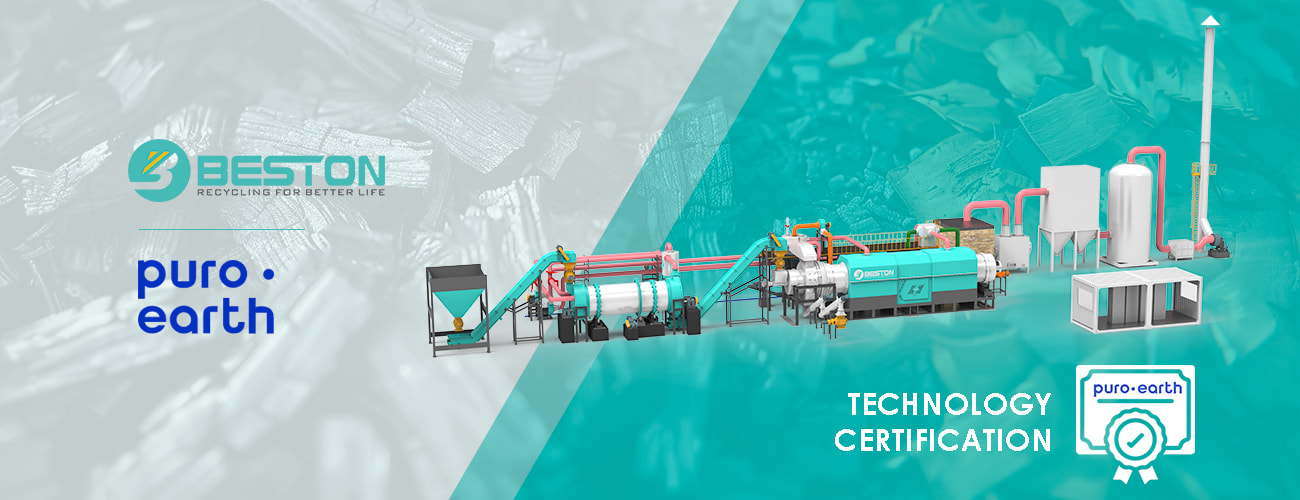
One of Beston’s major contributions is its biochar production equipment. Designed for versatility and efficiency, these systems can handle various wood types, from hardwood to softwood residues. The equipment utilizes controlled pyrolysis technology to convert wood waste into biochar, while capturing valuable gases that can be reused for energy production. This process ensures high-quality biochar output, consistent particle size, and minimal environmental emissions, making it suitable for global markets with strict sustainability standards.
Wood Charcoal Making Machines for Diverse Applications
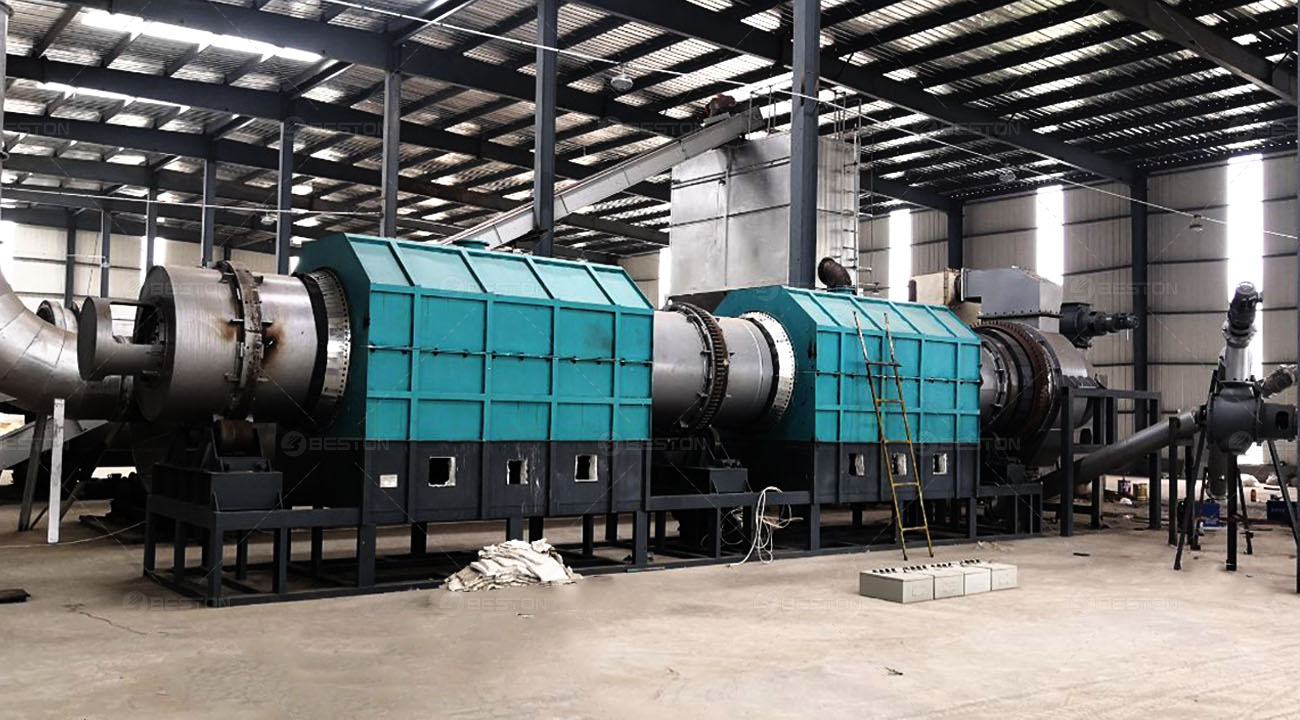
For energy and industrial applications, Beston’s wood charcoal making machine provides a reliable solution. These machines efficiently convert wood residues into premium charcoal, suitable for domestic fuel, barbecue use, or industrial energy applications. Advanced design features ensure uniform heating, minimal ash content, and reduced smoke emissions. By adapting to the type and moisture content of wood available in different regions, Beston’s equipment provides a scalable solution that meets local production needs while maximizing resource utilization.
Global Deployment and Regional Adaptation
Beston Group’s global perspective is evident in its ability to adapt technology for regional needs. In areas rich in forestry residues, large-scale biochar plants optimize production for agricultural and environmental purposes. In urban or industrial regions, small-to-medium charcoal making machines provide efficient solutions for recycling wood scraps into energy. This flexibility enables local operators to implement sustainable practices while reducing operational costs and generating revenue from waste materials. Moreover, Beston’s technical support ensures smooth installation, training, and maintenance, helping operators maximize the benefits of their equipment.
Environmental and Economic Benefits
Transforming waste wood into charcoal and biochar offers substantial environmental advantages. It reduces greenhouse gas emissions, diverts waste from landfills, and promotes sustainable forestry practices. Economically, operators benefit from revenue streams derived from biochar and charcoal sales, while also taking advantage of energy recovery from pyrolysis gases. By providing high-efficiency equipment and operational guidance, Beston Group helps businesses and communities worldwide unlock the hidden value in waste wood, fostering both ecological responsibility and economic growth.
Conclusion
Through innovative solutions and advanced machinery, Beston Group Co., Ltd. enables the transformation of waste wood into high-value resources on a global scale. Whether producing biochar for agriculture, wood charcoal for fuel, or other carbon-based products, Beston’s technology ensures efficiency, sustainability, and adaptability to regional conditions. By leveraging state-of-the-art biochar/charcoal making machine, communities and industries around the world can turn discarded wood into valuable assets, supporting a greener, more resource-efficient future.